○○○ 5.2.7 Inverse rule ⪢⪢
Suppose that f:A→B is a bisection where A and B are intervals.
If f is continuous on A, then f˂ is continuous on B.
┆
A
function f:A→B where A and B are intervals is a bijection if, for every b ∈ B, there exists a unique a ∈ A with f(a) = b.
http://qindex.info/i.php?x=5163
○○○ Inverse rule ⪢⪢
Suppose that f:A→B is a bisection where A and B are intervals.
If f is continuous on A, then f˂ is continuous on B.
┆
A
function f:A→B where A and B are intervals is a bijection if, for every b ∈ B, there exists a unique a ∈ A with f(a) = b.
http://qindex.info/i.php?x=9535
○○○ limit⎾f(x)⏐x→∞⏌= L ⪢⪢
Let f:A→R be a
function whose domain A contains the interval [a,∞) for some fixed real value of a. Then f(x) tends to L as x tends to infinity, if for every ε>0 there exists a real number X such that
x>X ⇒ ⎹f(x)−L⎸<ε.
http://qindex.info/i.php?x=3473
○○○ ahead ⪢⪢
Our first discovery is one that archeologists know the
function of but we can't imagine how the Roman's were able to come up with something so many centuries ahead of its time.
http://qindex.info/i.php?x=11827
○○○ gulp ⪢⪢
But if that doesn't work, like if there is not enough oxygen in the water, the axolotl has a backup, fully
functional lungs. It can use to gulp air from the surface. These organs are evolutionary leftovers from when its ancestors lived on land.
http://qindex.info/i.php?x=16131
○○○ about ⪢⪢
Notice how as x increases, the increase in y itself becomes greater and greater. This is one of the key things _____ exponential
functions in that the graph increases at an increasing rate.
#math
http://qindex.info/i.php?x=4050
 • Pantographs and the Geometry of Complex Functions
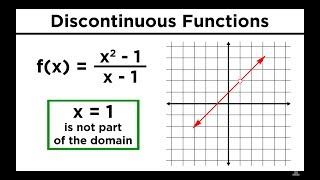 • 30 Continuous, Discontinuous, and Piecewise Functions
 • Riemann-Zeta function