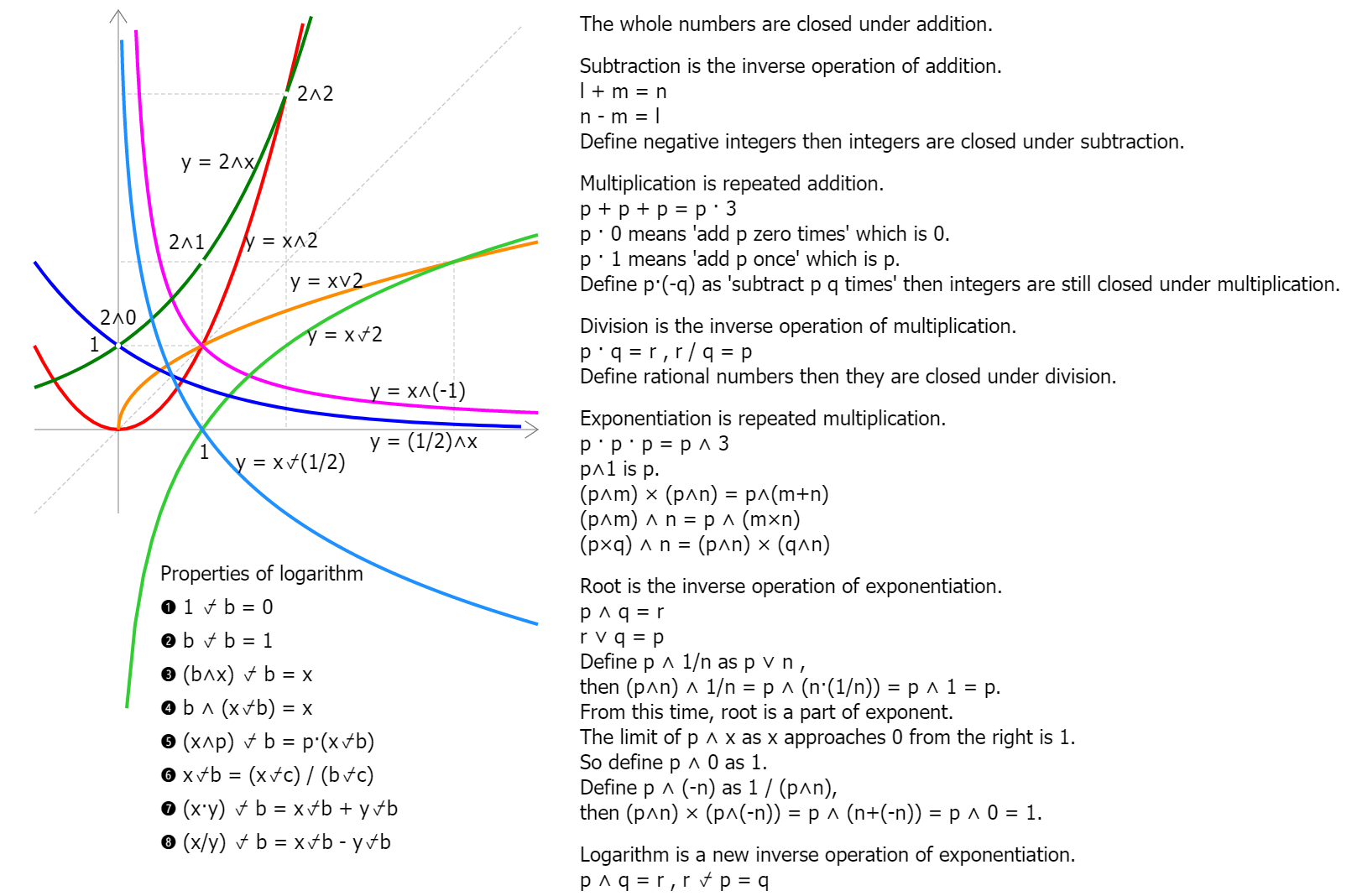
+plus −minus┆·times /over┆˄to ˅root ⍻log
•
+addition┆−subtraction
➊ Natural numbers are closed under addition.
➋ Subtraction is the inverse operation of addition.
p + q = r
r - q = p
r - p = q
If p or q is greater than r, the result is not a natural number.
By defining integers to contain 0 and negative numbers, they b ...
5216#17366
SBLNGS
CHLDRN
17366
•
·multiplication┆/division
➌ Multiplication is repeated addition.
p + p + p = p·3
p·0 means 'adding p zero times', which is 0.
If we define p·(-q) as 'subtracting p q times', then integers are closed under multiplication too.
➍ Division is the inverse operation of multiplication.
...
5216#4882
SBLNGS
CHLDRN
4882
•
˄exponentiation┆˅root
➎ Exponentiation is repeated multiplication.
p · p · p = p ˄ 3
p ˄ 1 means 'multiplying p one time', which means 'adding p one time', that is p.
(p˄m)·(p˄n) = p˄(m+n)
(p˄m)˄n = p˄(m·n)
(p·q)˄n = (p˄n)·(q˄n)
➏ Root is the inverse operation of exponentiati ...
5216#39179
SBLNGS
CHLDRN
39179
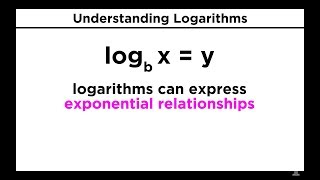 •
41 Logarithms Part 1
When we say log base b of x equals y, we are saying b to the y equals x.
With logs, the base of the log raised to the power of what's on the other side of the equal sign will equal the number that the log is operating on.
5216#3638
SBLNGS
CHLDRN
3638
•
Logarithms Explained
Anytime you see log base b of some number n, you can think about it as asking the question "What power do I need to put in my exponent to get b to that power equal to this number n?"
5216#9637
SBLNGS
CHLDRN
9637

-


 •
05 Exponents In Algebra
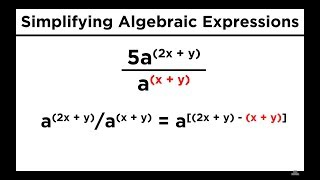 •
08 Simplifying Expressions With Roots and Exponents
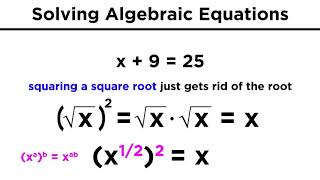 •
09 Solving Algebraic Equations With Roots and Exponents
 •
42 Logarithms Part 2
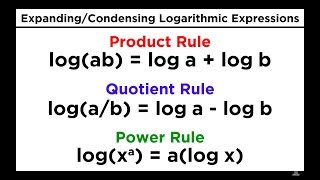 •
43 Logarithms Part 3
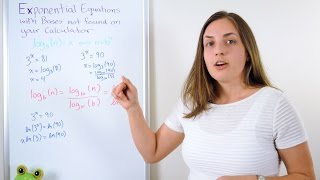 •
Change of base
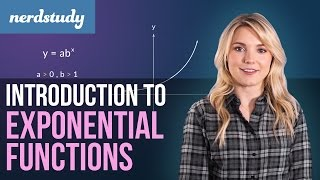 •
exponential function
 ◌◌◌
Exponentiation
 ◌◌◌
Logarithm
 •
Logarithms Explained


