EngliSea > math > Litionary
 
◌◌◌ Calculus
5079#5053 SBLNGS CHLDRN 5053
 
◎◎◎ complement ⪢⪢
When two angles are complementary, we say that one angle is the _____ of the other. #math
5079#9593 SBLNGS CHLDRN 9593
 
◎◎◎ complementary ⪢⪢
If two angles are _____ , then the sum of their measures is 90 degrees. → measure #math #bookmark
5079#9684 SBLNGS CHLDRN 9684
 
○○○ complex number ⪢⪢
A _____ is a number that can be expressed in the form a + bi where a and b are real numbers and i is the square root of -1. #math #bookmark
5079#9607 SBLNGS CHLDRN 9607
 
○○○ Composite rule ⪢⪢
If ⎾f(x)⏐x→a⏌= L and g is a function that is continuous in some neighborhood of x=L, then ⎾(g∘f)(x)⏐x→a⏌= g(L).
5079#6085 SBLNGS CHLDRN 6085
 
○○○ Composite rule ⪢⪢
Let f and g be continuous at c and f(c) respectively, such that g∘f is defined. Then g∘f is continuous at c.
5079#9097 SBLNGS CHLDRN 9097
 
◎◎◎ congruent ⪢⪢
#math
5079#3860 SBLNGS CHLDRN 3860
 
○○○ continuity ⪢⪢
5079#5080 SBLNGS CHLDRN 5080
 
• Cross Product
Given two nonzero vectors in two or three dimensions, their cross product is a vector with magnitude equal to the product of the magnitudes of the vectors times the sine of the angle between the vectors and direction perpendicular to the vectors.
5079#5291 SBLNGS CHLDRN 5291
 
• digits, numerals and numbers
A number is a count or measurement. It is really an idea in our minds. ○ count: the total determined by counting ○ measurement: the size, length or amount of something, as established by measuring
5079#9538 SBLNGS CHLDRN 9538
 
○○○ dimension ⪢⪢
The number of dimensions is how many values are needed to locate points on a shape.
5079#9579 SBLNGS CHLDRN 9579
 
◌◌◌ e
5079#5108 SBLNGS CHLDRN 5108
 
◌◌◌ function
5079#5109 SBLNGS CHLDRN 5109
 
○○○ gauge ⪢⪢
But for now you can just think of a gauge as meaning a choice of coordinate system.
5079#20854 SBLNGS CHLDRN 20854
 
○○○ Golden Section ⪢⪢
A length is devided into two parts in such a way that the smaller part is to the larger part in the same proportion as the larger one is to the whole. #math
5079#1780 SBLNGS CHLDRN 1780
 
• Greek alphabet
Α α Β β Γ γ Δ δ Ε ε Ζ ζ Η η Θ θ Ι ι Κ κ Λ λ Μ μ Ν ν Ξ ξ Ο ο Π π Ρ ρ ϱ Σ σ/ς Τ τ Υ υ Φ φ Χ χ Ψ ψ Ω ω
5079#5203 SBLNGS CHLDRN 5203
 
◌◌◌ Integration
With the sum of f of x i times delta x from i equals one to infinity in the limit of n approaching infinity.
5079#3658 SBLNGS CHLDRN 3658
 
› interest
interest ┆ start off
 
○○○ Inverse rule ⪢⪢
Suppose that f:A→B is a bisection where A and B are intervals. If f is continuous on A, then f˂ is continuous on B. ┆ A function f:A→B where A and B are intervals is a bijection if, for every b ∈ B, there exists a unique a ∈ A with f(a) = b.
5079#9535 SBLNGS CHLDRN 9535
 
• irrational number
Irrational numbers can't be expressed as the ratio of two integers. #math
5079#9591 SBLNGS CHLDRN 9591
 
◌◌◌ limit
5079#5110 SBLNGS CHLDRN 5110
 
○○○ limit⎾f(x)⏐x→∞⏌= L ⪢⪢
Let f:A→R be a function whose domain A contains the interval [a,∞) for some fixed real value of a. Then f(x) tends to L as x tends to infinity, if for every ε>0 there exists a real number X such that x>X ⇒ ⎹f(x)−L⎸<ε.
5079#3473 SBLNGS CHLDRN 3473
 
○○○ limit⎾f(x)︱x→a⏌= L ⪢⪢
f(x) tends to L as x tends to a, if and only if for every ε>0 there exists a δ>0 such that 0<⎹x−a⎸<δ ⇒ ⎹f(x)−L⎸<ε.
5079#5112 SBLNGS CHLDRN 5112
 
Proverbs and Quotes in English
Short sentences and easy words.
 
◌◌◌ Line
From here, we can construct a one- dimensional object by stringing an infinite number of points along a particular dimension. This object is called a line.
5079#5177 SBLNGS CHLDRN 5177
 
• Linear systems
A collection of 2 or more linear equations
5079#3810 SBLNGS CHLDRN 3810
 
○○○ linearize ⪢⪢
5079#20853 SBLNGS CHLDRN 20853
 
○○○ logarithm ⪢⪢
Logarithm is the inverse operation of exponentiation. p˄q = r ┆ logₚ(r) = q ➔ r⍻p = q
5079#5054 SBLNGS CHLDRN 5054
 
◌◌◌ loop
#math
5079#16024 SBLNGS CHLDRN 16024
 
○○○ Lorenz Gauge ⪢⪢
5079#20852 SBLNGS CHLDRN 20852
 
◌◌◌ matrix
5079#3811 SBLNGS CHLDRN 3811
 
○○○ mold ⪢⪢
A sphere and a cube are topologically the same thing since you can just kind of mold one into the other. #math
5079#16021 SBLNGS CHLDRN 16021
 
• Pascal's Triangle
5079#3736 SBLNGS CHLDRN 3736
 
◌◌◌ Plane
By stringing an infinite number of lines along a dimension perpendicular to the line, a two-dimensional object called a plane can be obtained. And then if we string an infinite number of planes in either direction, we get three dimensional space.
5079#5031 SBLNGS CHLDRN 5031
 
○○○ Point ⪢⪢
First we look at a point. This is nothing more than a location in space. It is zero-dimensional, meaning that it has no dimensions of any kind. #math
5079#5030 SBLNGS CHLDRN 5030
 
○○○ power rule ⪢⪢
(x˄n)ᐁx = n·x˄(n−1) #math #bookmark
5079#9686 SBLNGS CHLDRN 9686
 
• prime number theorem
○ π(n) is asymptotically equivalent to x/log x. ○ Of the first n integers, roughly 1/log n of them would be prime. #math
5079#9583 SBLNGS CHLDRN 9583
 
◌◌◌ Quadrilateral
5079#5167 SBLNGS CHLDRN 5167
 
○○○ quadrilateral ⪢⪢
5079#11766 SBLNGS CHLDRN 11766
 
○○○ rational number ⪢⪢
5079#9590 SBLNGS CHLDRN 9590
 
○○○ rectangle ⪢⪢
5079#20604 SBLNGS CHLDRN 20604
 
○○○ rhombus ⪢⪢
If all four sides are the same length, we call the shape a _____. #math #bookmark
5079#20603 SBLNGS CHLDRN 20603
 
• Roman Numerals
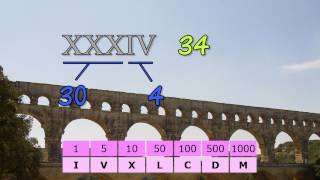
The Romans showed numbers into the thousands using these 7 symbols: I for 1, V for 5, X for 10, L for 50, C for 100, D for 500 and M for 1000.
5079#5164 SBLNGS CHLDRN 5164
 
○○○ Sandwich rule ⪢⪢
Let f, g and h be three functions satisfying f(x)≤g(x)≤h(x) in some detected neighborhood of x=a. If ⎾f(x)⏐x→a⏌=⎾h(x)⏐x→a⏌= L then ⎾g(x)⏐x→a⏌= L.
5079#5218 SBLNGS CHLDRN 5218
 
○○○ Sandwich rule ⪢⪢
Let f, g and h be functions such that f(x)≤g(x)≤h(x) for all x in some neighborhood of c and such that f(c)=g(c)=h(c). If f and h are conyinuous at c, then so is g.
5079#6899 SBLNGS CHLDRN 6899
 
◌◌◌ Space
By stringing an infinite number of lines along a dimension perpendicular to the line, a two-dimensional object called a plane can be obtained. And then if we string an infinite number of planes in either direction, we get three dimensional space.
5079#5178 SBLNGS CHLDRN 5178
 
○○○ Sum/product/quotient rules ⪢⪢
Suppose that ⎾f(x)⏐x→a⏌= L and ⎾g(x)⏐x→a⏌= M. Then the following rules apply. ❶ Sum Rule ⎾f(x)+g(x)⏐x→a⏌= L+M ❷ Product Rule ⎾f(x)·g(x)⏐x→a⏌= L·M ❸ Quotient Rule ⎾f(x)/g(x)⏐x→a⏌= L/M, provided that M≠0.
5079#5283 SBLNGS CHLDRN 5283
 
○○○ Sum/product/reciprocal rules ⪢⪢
Sum rule. If f and g are continuous at c then f+g is continuous at c.┆Product rule. If f and g are continuous at c then f·g is continuous at c.┆Reciprocal rule. If f is continuous at c and f(c) is not 0 then 1/f is continuous at c.
5079#5331 SBLNGS CHLDRN 5331
 
• Taylor and Maclaurin Series
5079#3574 SBLNGS CHLDRN 3574
 
› triangle
triangles ┆ triangles ┆ acute ┆ equilateral triangle ┆ isoscelese triangle ┆ obtuse triangle ┆ right triangle ┆ scalene triangle
 
◎◎◎ trigonometry ⪢⪢
5079#32670 SBLNGS CHLDRN 32670
 
○○○ β ⪢⪢
5079#20855 SBLNGS CHLDRN 20855
 
› π
bubonic ┆ Christoph Grienberger ┆ Francois Viete ┆ Ludolph van Ceulen ┆ π
 
○○○ Φ ≈ 1.618 ⪢⪢
Keplar observed that the relationship between a number in the Fibonacci sequence and the previous number more and more closely approaches the irrational number Φ, the longer the sequence is continued. #math #bookmark
5079#9464 SBLNGS CHLDRN 9464
 
○○○ ψ ≈ 137.5° ⪢⪢
#math #bookmark
5079#9465 SBLNGS CHLDRN 9465
 
○○○ ψ ≈ 137.5° ⪢⪢
As angles smaller than 180° proved to be more handy in practice, the smaller of the resultant angles is usually called golden angle. #math
5079#28243 SBLNGS CHLDRN 28243
 
• √2 ≈ 1.414
According to Pythagoras theorem the diagonal length of a square with each side measuring one unit would be square root of two. The assumption that square root of two could be expressed as a ratio of two integers deduces a contradiction. #math
5079#9592 SBLNGS CHLDRN 9592
 
› _script
5079#5117 SBLNGS CHLDRN OPN

-