
 •
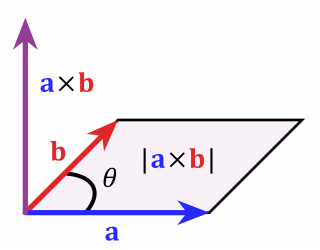
Cross Product
Given two nonzero vectors in two or three dimensions, their cross product is a vector with magnitude equal to the product of the magnitudes of the vectors times the sine of the angle between the vectors and direction perpendicular to the vectors.
5079#5291
SBLNGS
CHLDRN
5291
○○○
limit⎾f(x)⏐x→∞⏌= L ⪢⪢
Let f:A→R be a function whose domain A contains the interval [a,∞) for some fixed real value of a. Then f(x) tends to L as x tends to infinity, if for every ε>0 there exists a real number X such that
x>X ⇒ ⎹f(x)−L⎸<ε.
5079#3473
SBLNGS
CHLDRN
3473
○○○
Sandwich rule ⪢⪢
Let f, g and h be three functions
satisfying f(x)≤g(x)≤h(x) in some delected neighborhood of x=a.
If ⎾lim f(x)⏐x→a⏌=⎾lim h(x)⏐x→a⏌= L then
⎾lim g(x)⏐x→a⏌= L.
5079#4821
SBLNGS
CHLDRN
4821
○○○
Sandwich rule ⪢⪢
Let f, g and h be functions such that f(x)≤g(x)≤h(x) for all x in some neighborhood of c and such that f(c)=g(c)=h(c).
If f and h are conyinuous at c, then so is g.
5079#6899
SBLNGS
CHLDRN
6899
○○○
Sum/product/quotient rule ⪢⪢
Suppose that
⎾lim f(x)⏐x→a⏌= L and ⎾lim g(x)⏐x→a⏌= M.
Then the following rules apply.
❶ Sum Rule ⎾lim f(x)+g(x)⏐x→a⏌= L+M
❷ Product Rule ⎾lim f(x)·g(x)⏐x→a⏌= L·M
❸ Quotient Rule
⎾lim f(x)/g(x)⏐x→a⏌= L/M, provided that M≠0.
5079#4820
SBLNGS
CHLDRN
4820
○○○
Sum/product/reciprocal rules ⪢⪢
Sum rule. If f and g are continuous at c then f+g is continuous at c.┆Product rule. If f and g are continuous at c then f·g is continuous at c.┆Reciprocal rule. If f is continuous at c and f(c) is not 0 then 1/f is continuous at c.
5079#5331
SBLNGS
CHLDRN
5331
 ○○○
Φ ≈ 1.618 ⪢⪢
Keplar observed that the relationship between a number in the Fibonacci sequence and the previous number more and more closely approaches the irrational number Φ, the longer the sequence is continued. #math #bookmark
5079#9464
SBLNGS
CHLDRN
9464

-


 ○○○
cardinal number ⪢⪢
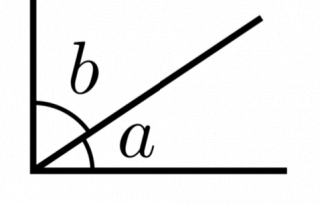 ◎◎◎
complement ⪢⪢
 ○○○
complex number ⪢⪢
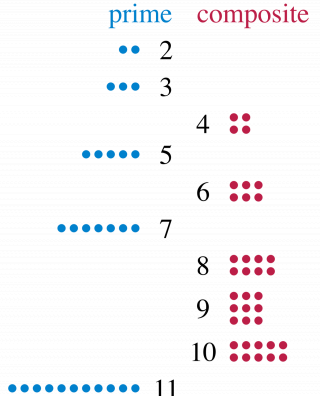 ○○○
composite number ⪢⪢
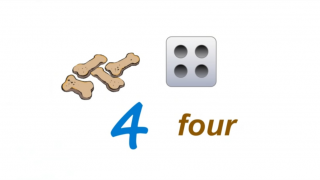 •
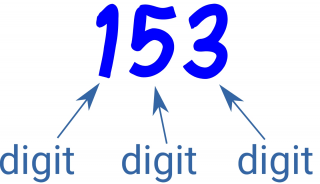
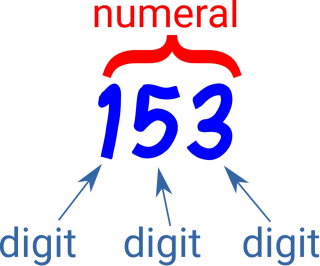
digits, numerals and numbers
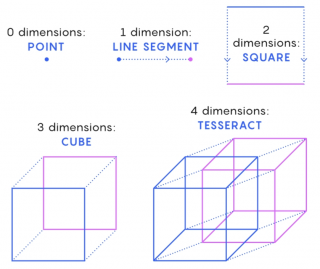 ◎◎◎
dimension ⪢⪢
 ○○○
Golden Section ⪢⪢
 •
Greek alphabet
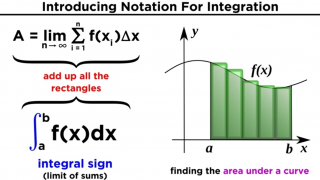 ◌◌◌
Integration
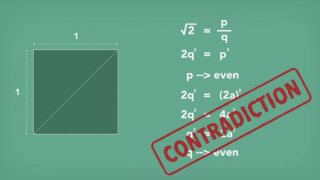 •
irrational number
 ○○○
nominal number ⪢⪢
 ◎◎◎
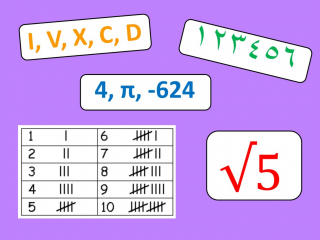
number ⪢⪢
 ◎◎◎
number ⪢⪢
 ○○○
number ⪢⪢
 ○○○
perimeter ⪢⪢
 ○○○
prime number ⪢⪢
 •
prime number theorem
 ○○○
rhombus ⪢⪢
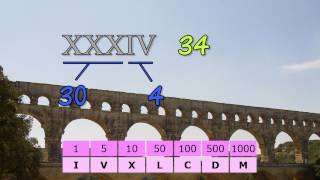 •
Roman Numerals
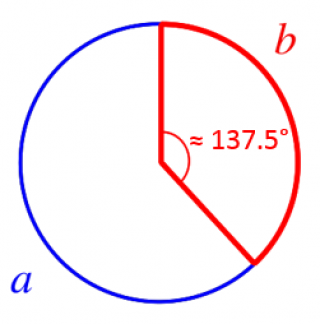 ○○○
ψ ≈ 137.5° ⪢⪢